Skip to Main Content
pillar6 min read

How personalised storybooks work at Yoopbook

A clear explanation of Yoopbook’s authored-story process: choose a complete story, provide one separate photograph per required person, and understand what changes in the finished book.

Last reviewed July 25, 2026

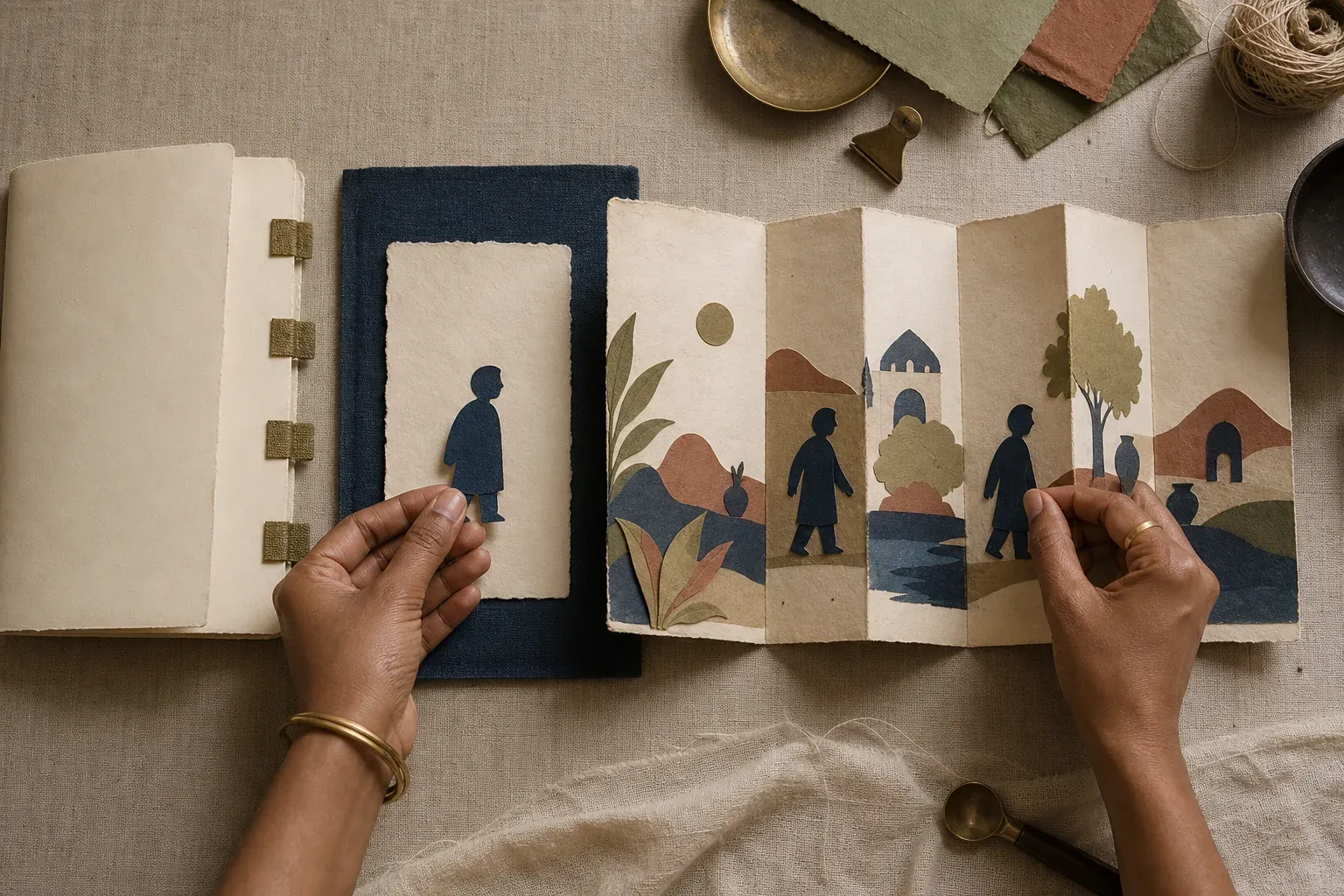
Hands move one indigo paper identity from a separate source card into a fixed accordion of authored scenes.
Conceptual editorial scene showing one identity entering an authored story sequence. It is not a customer upload, released title or finished book.

The short answer

A Yoopbook begins with a complete authored story. You choose the story and its declared cast, then provide one separate, clear photograph for each required person. Those identities are illustrated into the story’s existing scenes; the upload does not rewrite the plot, choose the pose or copy the person’s clothes into every page.

Keep these four things in view

  • 01

    The story and required roles are chosen before photographs are added.

  • 02

    One separate source photograph is required for each declared person.

  • 03

    Identity can change; plot, action, pose, costume and setting remain authored.

  • 04

    The product page and checkout are the authority for current availability and order options.

On this page

It starts with a story, not a prompt

Yoopbook is story-first. Each edition begins with an authored manuscript, a defined sequence of scenes and a declared cast. A customer chooses between those complete stories rather than asking a generator to invent a new plot at checkout.

That distinction makes the buying decision easier to inspect. Before providing a photograph, you should be able to understand the premise, who appears in the story, how many people need photographs and which language or format is actually offered.

Identity and authorship

What changes—and what stays authored

The source photograph is an identity reference. It can inform recognisable facial structure, skin tone, hair, age, build and distinguishing physical traits. The story template remains responsible for what the character is doing and where the moment takes place.

The uploaded photograph’s room, lighting, pose, expression and outfit are not automatically copied into the book. If a scene calls for a lantern, a raincoat or a look of concentration, those choices belong to the authored scene.

The boundary

Three different kinds of control

A clear product separates the identity that is personalised from the story decisions that stay authored.

01

Personalised

the identity assigned to each declared cast role.

02

Authored

plot, action, pose, gaze, expression intent, costume, composition and setting.

03

Not customer controls

arbitrary character additions, prompt-written scenes or role swapping.

From shelf to order

The five decisions in the customer journey

Current availability, price and delivery choices can change. The live product page and checkout—not an evergreen guide—should be treated as the authority for those facts.

  1. 01

    Choose the story

    Start with the premise and the reading moment you want to share.

  2. 02

    Confirm the cast

    Check every declared role before preparing any photograph.

  3. 03

    Prepare one photo each

    Provide one clear, separate identity reference for every role.

  4. 04

    Choose the edition

    Select only the language, format and options shown for that story.

  5. 05

    Review the mapping

    Check who belongs to each role before payment.

Why cast is part of the product

A solo-child story and a parent-and-child story are not the same book with a character toggle. Their scenes, relationships and actions are written differently. That is why each story declares the people it needs instead of offering an unrestricted cast builder.

For a multi-person edition, each person keeps a stable role across the book. Separate photographs reduce ambiguity: Mum’s reference belongs to Mum’s role, the child’s reference belongs to the child’s role, and neither identity should borrow traits from the other.

Before you order

What to verify before ordering

A trustworthy product page should state the title and premise, required cast, separate-photo count, supported story language, physical format, current price and availability. It should distinguish representative story art from a proof made from a buyer’s own upload. If any fact that matters to your decision is missing—especially photograph handling, production status or delivery—ask Yoopbook before sharing a photograph or placing an order. A guide should clarify the process, never manufacture certainty.

  1. A specific title and premise

  2. Every required cast role

  3. The separate-photo count

  4. The supported story language and physical format

  5. Current price and availability

  6. The delivery choices offered at checkout

Editorial record

How this page was made

Evidence basis
First-party editorial guidance reviewed for authored-story, cast and personalisation requirements.
Testing status
This guide does not claim independent product testing or specialist child-development review.
Commercial interest
Yoopbook publishes this guide and may benefit if a reader later chooses a Yoopbook product.
Limitation
Current title availability, price, format and checkout options must be verified on the live product and checkout surfaces.

Review scope: Authored-story, cast and personalisation requirements

Sources checked (2)
  1. Yoopbook editorial standards

    Yoopbook · first-party-source · checked July 28, 2026

    Defines Yoopbook’s sourcing, correction, review and product-truth boundaries.

  2. Yoopbook storefront

    Yoopbook · product-truth · checked July 28, 2026

    Current first-party presentation of the authored-story, cast and source-photo model.

Continue with confidence

Compare the stories and check the cast, photographs and options shown for each edition.

Browse the storybook shelf