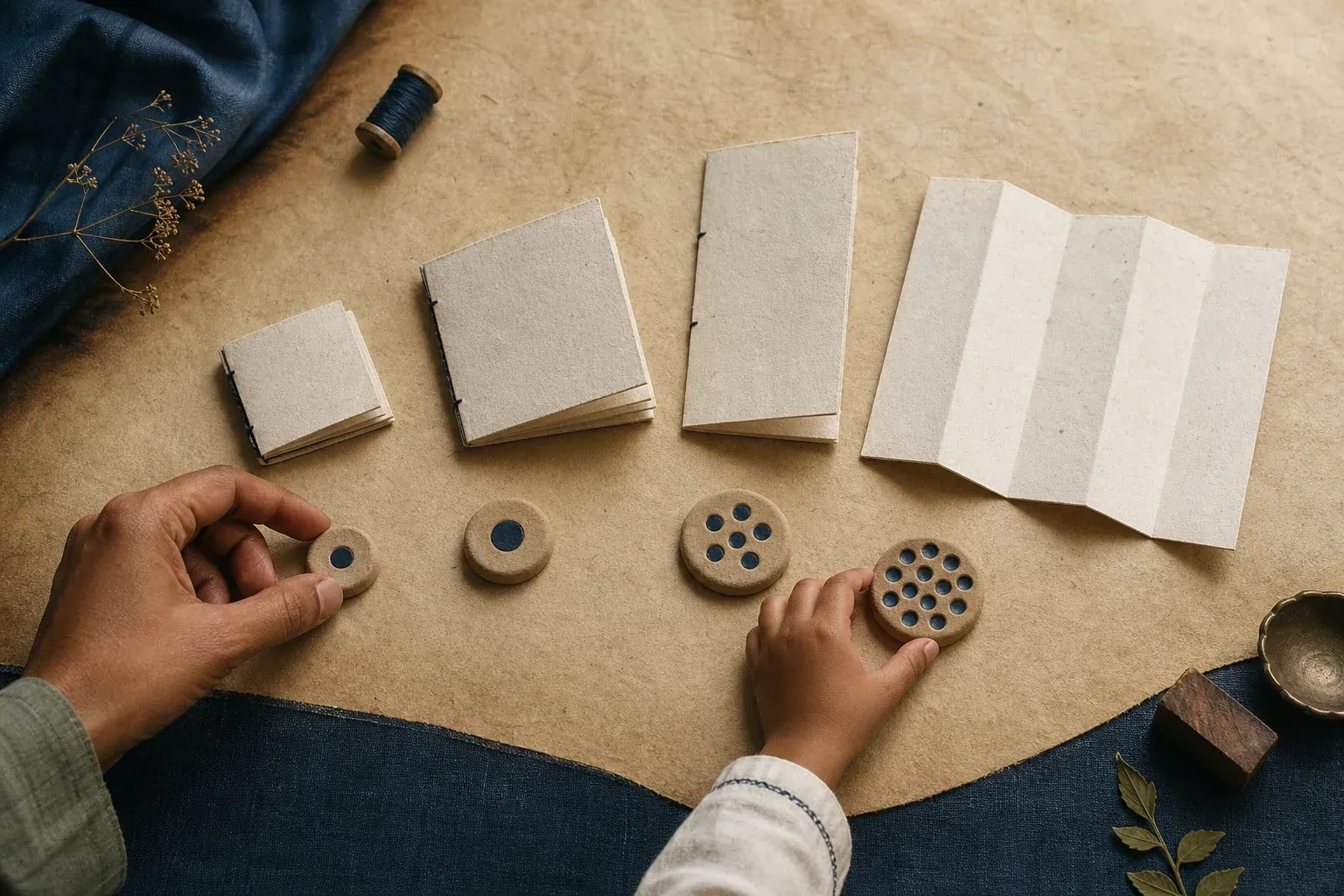
How to choose a personalised storybook by age
- Written by
- Yoopbook Editorial Team
- Last reviewed
- 24 July 2026
- Reviewed for
- Age-claim boundaries and reading-stage decision quality
The short answer
Use age as a starting question, not the entire recommendation. First decide whether the book will be read aloud, shared together or approached by an emerging independent reader. Then compare the authored premise, amount of story information, declared cast, photograph requirements and the evidence available for that exact edition. Only use a title’s age range when it has been explicitly reviewed and published.
Keep these four things in mind
- A child’s age does not reveal how the book will be read.
- Read-aloud, shared-reading and independent-reading needs are different.
- Age suitability must be approved title by title, not copied from a category.
- One useful age guide is stronger than a page for every adjacent age.
01
Treat age as a useful start, not a complete answer
Two children with the same birthday may meet a story differently. One may enjoy listening to a longer read aloud; another may want to study the pictures, join in with repeated language or attempt parts independently. The gift buyer therefore needs more than an age number.
Begin with the intended reading situation. Who will usually hold the book? Will an adult read the complete text? Is the pleasure mostly in recognising the character, following the adventure together or revisiting familiar lines? Those questions produce a more honest recommendation than attaching every book to every age.
02
Choose by reading mode before choosing by number
A read-aloud choice can rely on an adult to carry the language and pace while the child follows the illustrations and story action. Shared reading benefits from moments that invite prediction, recognition or conversation. An emerging independent reader needs a book whose language and layout have genuinely been reviewed for that use.
These are selection modes, not developmental promises. Yoopbook should describe only what has been inspected in the actual manuscript, layout and physical edition. If a product page does not publish an approved reading mode or age range, treat that information as undecided.
- Read aloud: an adult carries the text and the child follows the story.
- Read together: adult and child share attention, questions and repeated moments.
- Emerging independent reading: suitable only when language and layout have been reviewed for it.
- Keepsake viewing: the child may revisit images even when an adult still reads the text.
03
Compare the actual story, not a generic age badge
Read the premise and inspect several scenes. Is the central action easy to follow? Does the child have a meaningful role? Are there quiet and active moments? Does the story depend on a relationship that matches the people who should appear?
Then check the practical layer: declared cast, number of separate photographs, story language, current format and truthful product proof. Personalisation cannot repair a story that is too vague, too repetitive or simply wrong for the intended reading moment.
04
Ask the parent when the child is not yours
A grandparent, aunt, uncle or family friend may know the child well without knowing the current reading routine. One short conversation can prevent a poor recommendation. Ask what the child enjoys hearing, whether bedtime reading is shared and whether the buyer can obtain the separate photographs required by the chosen cast.
You do not need to ask for a child’s private information merely to choose a story. Avoid collecting school details, precise reading scores or unnecessary personal facts. The decision can usually be made from the reading moment, story taste, cast and photo readiness.
- Do they currently enjoy being read to?
- Which kinds of stories do they ask to hear again?
- Should anyone else appear in the story?
- Can a parent or guardian provide the required photographs?
- Does the occasion impose a real ordering deadline?
05
Why Yoopbook does not publish a page for every age
A useful age page needs a distinct selection job, several genuinely suitable books and evidence that its recommendations differ from the neighbouring age. Replacing “five” with “six” in otherwise identical copy would not help a family choose and would create competing versions of the same answer.
Yoopbook will introduce commercial age collections only after the underlying titles have approved age guidance, the catalogue offers real choice and customer search data shows a distinct need. Until then, this guide owns the decision framework and the live product pages own title-specific facts.
Your next step
Compare the current story premises
Use the live shelf to compare story, cast, photographs and current order facts without assuming an unapproved age fit.
Compare the current story premises